
 10 facts about the Milky Way
The Milky Way Galaxy is an immense and very interesting place. Not only does it measure some 100,000–120,000 light-years in diameter, it ...
10 facts about the Milky Way
The Milky Way Galaxy is an immense and very interesting place. Not only does it measure some 100,000–120,000 light-years in diameter, it ...
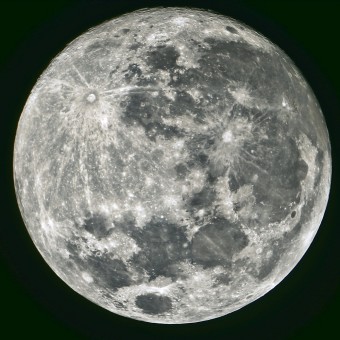 Why the Same Side of the Moon Always Faces the Earth
One Moon “day” is approximately 29 1/2 Earth days. This rotation coincides with its orbit around the Earth so that we only see about 59%...
 What Will Happen When the Earth’s Magnetic Field Switches or Collapses
The Earth’s magnetic field protects life on Earth, shielding it from damaging radiation and moderating our climate. So the idea that it co...
 Why Doesn’t the Heart Get Tired and Need to Rest Like Other Muscles?
Anywhere from 60 to 100 times every minute of every day of every year of your (hopefully) long life, your heart beats. Unlike the other...
 Why are Some Ice Cubes Clear and Others Cloudy?
Unless you happen to have a specialized ice machine in your home, it is practically guaranteed that the ice your freezer makes is of the...
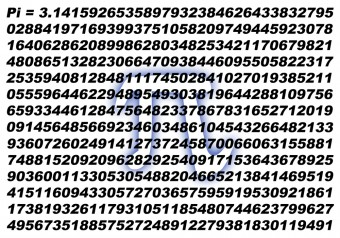 A Brief History of Pi
That the ratio of the circumference of a circle to its diameter is constant has been known to humanity since ancient times; yet, even tod...
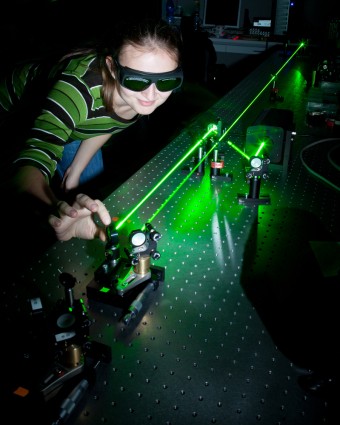 How Lasers Work and Who Invented Them
On May 16, 1960, Theodore Maiman shined a high-powered light at a ruby partially coated with silver and the result was the world’s first...
 Why Do We Age?
Gray hair, memory loss, wrinkles and brittle bones, sooner or later, each of us gets old (if we’re lucky). Yet scientists tell us that th...
 How Memory Works
A complex network that stretches from your basest sensory organs to the most sophisticated portions of your brain, memory aids in everyt...
 Why Screws Tighten Clockwise
One of the six simple machines, a screw is nothing more than an inclined plane wrapped around a centre pole. While today screws come in...
